Introduction — a shop story, some numbers, and a question
I was leaning over a bench in a small metal shop when the smell hit me — melted plastic and burnt ink, like a campfire gone wrong. In that same workshop, a simple laser job without proper cleanup can raise particle count and VOC levels in minutes, and the only tool between a coughing crew and clear air is a good laser marking fume extractor. Around 60% of small shops tell me they notice soot and odor after runs, and some report eye irritation within an hour (true story). So how do we fix the mess without blowing the budget or killing productivity? I want to walk you through what I’ve seen work — and what keeps failing — before we jump to solutions.
Why the old fixes fall short: hidden flaws of current setups
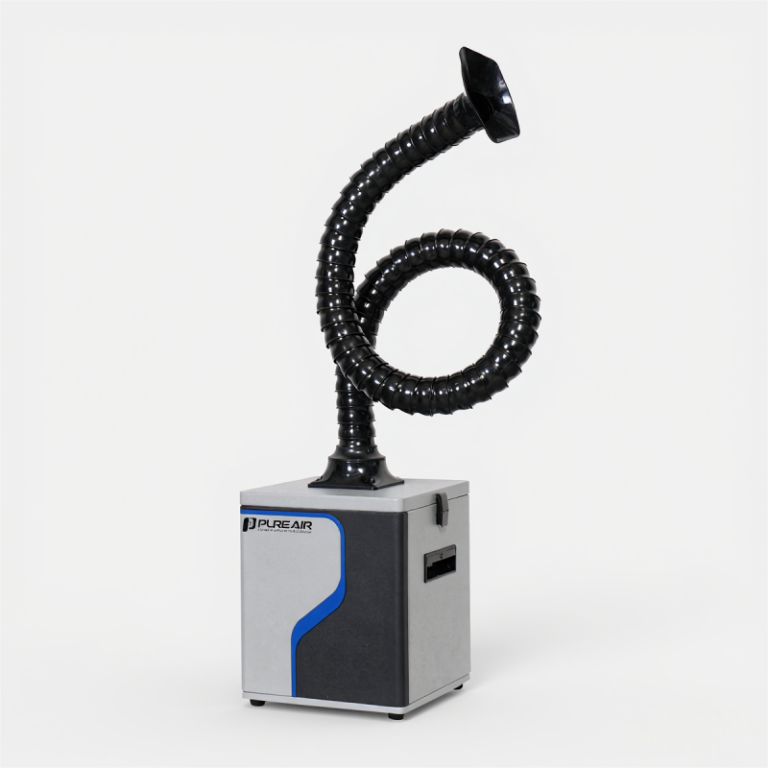
fiber laser marking fume extractor gets mentioned a lot in my notes. I’ll be blunt: many shops bolt on a cheap fan and call it a day. That kind of quick patch may move smoke, but it doesn’t treat it. The real trouble is in the details — poor HEPA filtration, overloaded activated carbon, and low airflow velocity mean particles and VOCs stick around. I’ve measured systems that pass air but fail to reduce particle count. Look, it’s simpler than you think: if the filter can’t capture ultrafine particles, you still have a health problem.
What’s hiding behind the smoke?
When I inspect setups, I check three things fast — capture at the source, proper filter stages (pre-filter, HEPA, activated carbon), and clear airflow paths. Many vendors advertise CAD drawings and high airflow numbers, but they skip real-world tests. That gap shows up as dust on tool faces and lingering smells. From a tech angle, power converters and blower specs matter too; undersized converters mean fans spin less than rated. The fix is layered: good hooding, robust filtration, and matched blower electronics. I swear — spend on the right stage, not shiny labels.
Where we go next: principles and practical choices
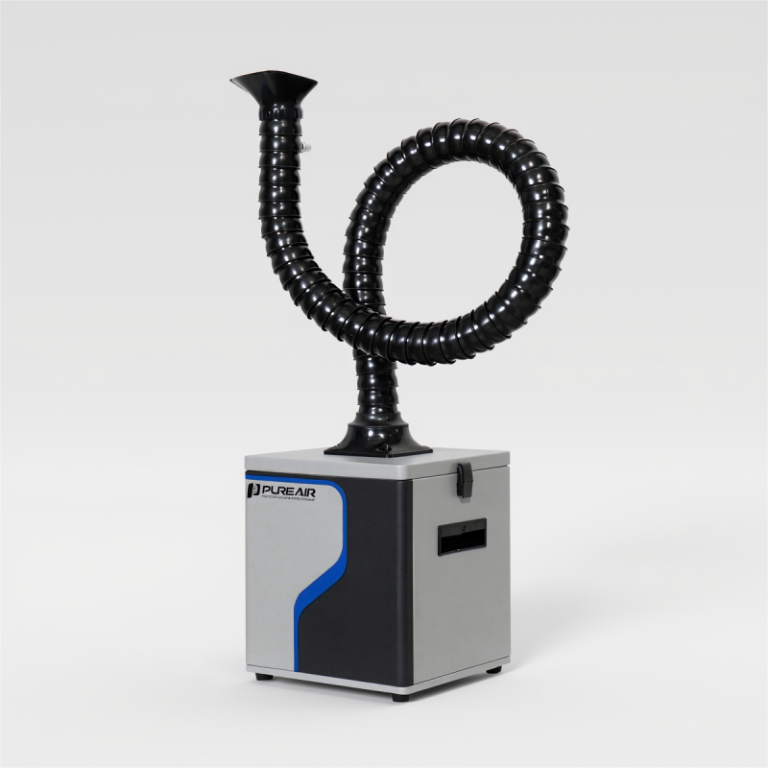
Let’s talk upgrades that actually change the game. Modern fiber laser marking fume extractor designs use staged filtration plus smart airflow control. That means pre-filters trap large particulates, HEPA filtration grabs the submicron dust, and activated carbon deals with VOCs and odors. Add a feedback sensor for particle count and you’ve got real-time tuning (automatic speed control saves energy and noise). These are not buzzwords — they’re practical moves that cut maintenance and keep the shop safe.
Real-world impact — what to expect
In my experience, shops that move from a single-stage fan to a staged extractor see measurable drops in particle counts and smell complaints. Productivity often rises because people don’t step away from the bench to clear their throats every few minutes — funny how that works, right? When choosing, I look for build quality, filter availability, and electrical matching (fans, power converters). Also think about service: can you swap a HEPA pack in ten minutes? That matters on a Monday morning when a shift starts.
To wrap up with some useful guidance, here are three metrics I use when evaluating systems — and you should too: 1) Clean Air Delivery Rate (CADR) at source capture; 2) Filter stages and replacement cost per year; 3) Real-world noise and power draw under load. Measure those, and you’ll be far ahead of most buyers. I’m telling you this from shop floor time and field checks — not brochure reading. For solid options and practical support, check out PURE-AIR