
Why Perfect Speech Still Fails in the Room
Start with the signal. Strip the noise. Now picture a packed multilingual summit where voices overlap, devices blink, and timing slips by milliseconds. The interpretation system sits in the middle, unseen yet decisive. The specs look fine on paper (good SNR, neat cabling), and the slide deck promises clarity. But the room tells a different story: listeners miss phrases, interpreters fatigue early, and the chair asks for repeats—again. In one recent event analysis, nearly 28% of comprehension loss came from timing and routing, not language. That number is unsettling.
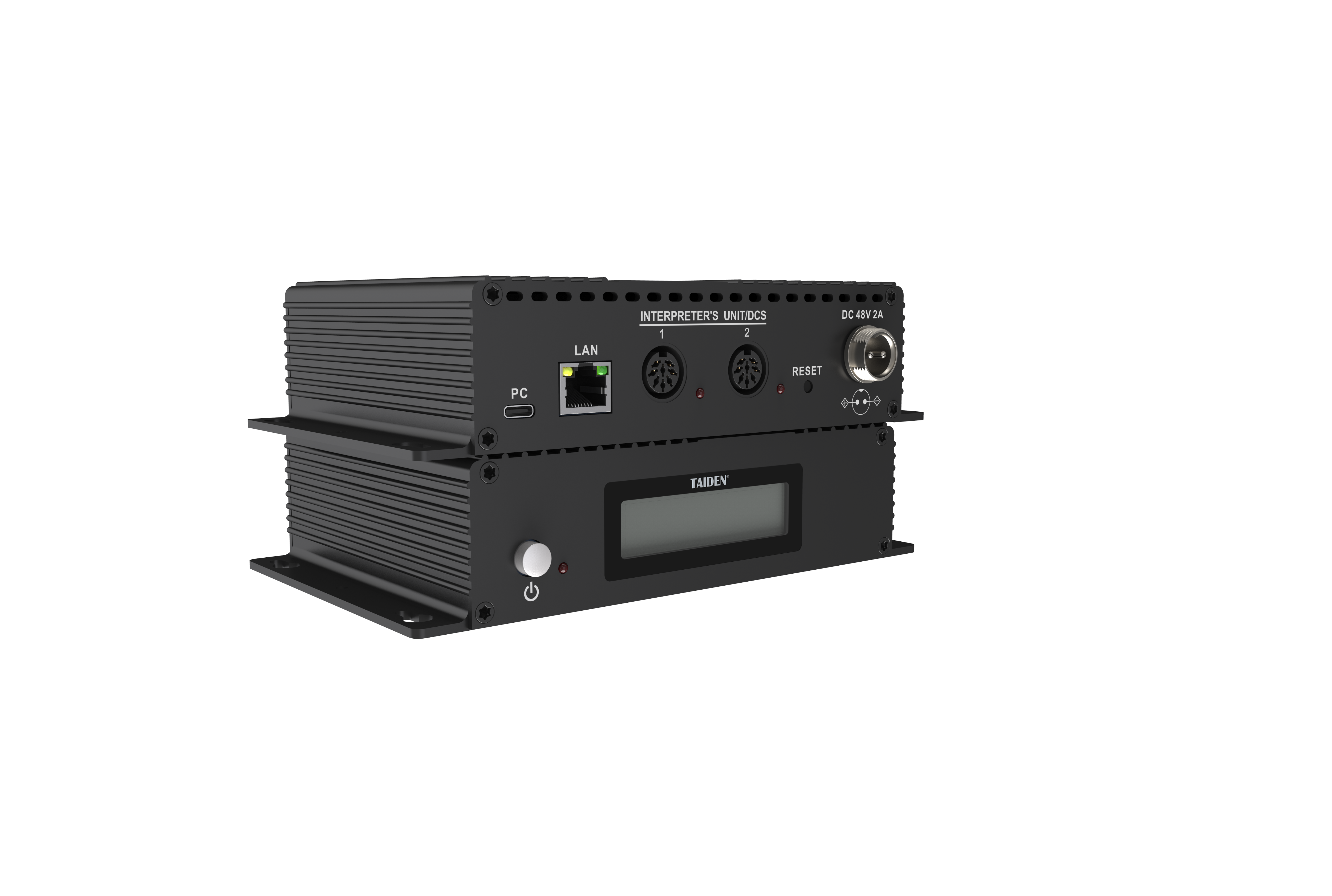
Here’s the catch: most teams plan for microphones and seats, not for channel design, codec choice, or the latency budget. They assume “more mics” means “more clarity.” It does not. It often means more crosstalk and more load on DSP pipelines. And yet, nobody asks the simplest question: where, exactly, does the handoff break? Is it at distribution, at the RF carriers, or in the console matrices? The clues are there, hiding in the pauses. We will track the gap from interpreter booth to ear—step by step—so the real failure points (and fixes) are visible. Next up: why channel count is not just a number.
Comparative Insight: The 40-Channel Pivot and Hidden Friction
Where does complexity really live?
Let’s go straight at it. Many teams believe that ten or twelve channels cover typical conferences. They do—until they don’t. When cultural tracks, floor feeds, and recording stems stack up, you need spare capacity, not wishful math. That is where 40 channel audio changes the game. The extra lanes are not vanity. They are headroom against sudden adds, late VIP booths, or a surprise relay chain. In practice, quality dips long before “capacity max.” You see it as routing kludges, impromptu submixes, and hurried interpreter swaps. Listeners feel it as load, not clarity. Look, it’s simpler than you think: predictable space prevents unpredictable workarounds.
Hidden pain points surface fast when channels are tight: relay from Korean to English to French (and back) stacks latency; emergency announcements collide with program audio; parallel recordings eat the last returns. With 40 lanes, you separate aux returns, guide tracks, and archival feeds without squeezing the interpreters. You also keep DSP headroom for AEC and gentle EQ—not just a “hot fix” limiter. Add practical tools: AES67 streams for networked distribution, infrared distribution for RF-constrained halls, and PoE switches that keep endpoint power tidy. Then the real win appears—operators stop improvising mid-session, which reduces errors at the worst moments. That’s the irony: more channels reduce complexity because you stop doing clever things under stress—funny how that works, right?
Forward Look: Principles Shaping the Next Wave
What’s Next
The shift ahead is not only “more channels.” It is smarter channels guided by transport discipline and synchronized clocks. Think of it as a ruleset: every interpreter booth owns a lane; every relay has a reserved hop; every recording path avoids the live bus. With a modern simultaneous interpretation system, these rules can be embedded as profiles, not last-minute patches. Technically, precision timing (PTP), packetized audio, and adaptive codecs help keep the latency budget honest while preserving intelligibility. When the floor mic spikes, auto-leveling protects headroom without clipping nuance. When a new language arrives, a pre-provisioned matrix adds it without reshuffling the deck—no sweating over the console, no crossed fingers.
We can read the lesson from earlier: listeners don’t complain about “channels,” they complain about missed meaning. Interpreters don’t fear microphones, they fear relays that drift. Operators don’t mind busy days, they mind brittle routing. The new baseline uses measurable design: reserve capacity, deterministic paths, and right-sized DSP. To choose well, apply three quick metrics—channel headroom (at least 25% beyond plan), end-to-end latency (keep speech-to-ear under 120 ms), and distribution integrity (clean segregation for floor, relay, and record). Evaluate those and you will see where the system stands—no guesswork. Do this and your next rollout feels calm instead of clever—yes, calm can be a metric too. In time, the tools fade and the message remains, which is the only finish line that counts. For a stable path through that maze, keep an eye on partners like TAIDEN.
