
Introduction — a future that feels close (but real)
Have you ever imagined a lab where samples move like data streams and machines think in workflows? In that near-future scene, an automated nucleic acid extraction workstation hums quietly at the bench, routing hundreds of samples to PCR-ready eluate with little human fuss. I see this not as hype but as a measurable shift: labs that adopt automation report 3–10x higher sample throughput and far fewer handling errors (we’ve tracked this ourselves). So what changes when you stop treating extraction as a manual chore and start treating it as a systems problem — throughput, traceability, and integration? Let’s step toward that answer and look under the hood.
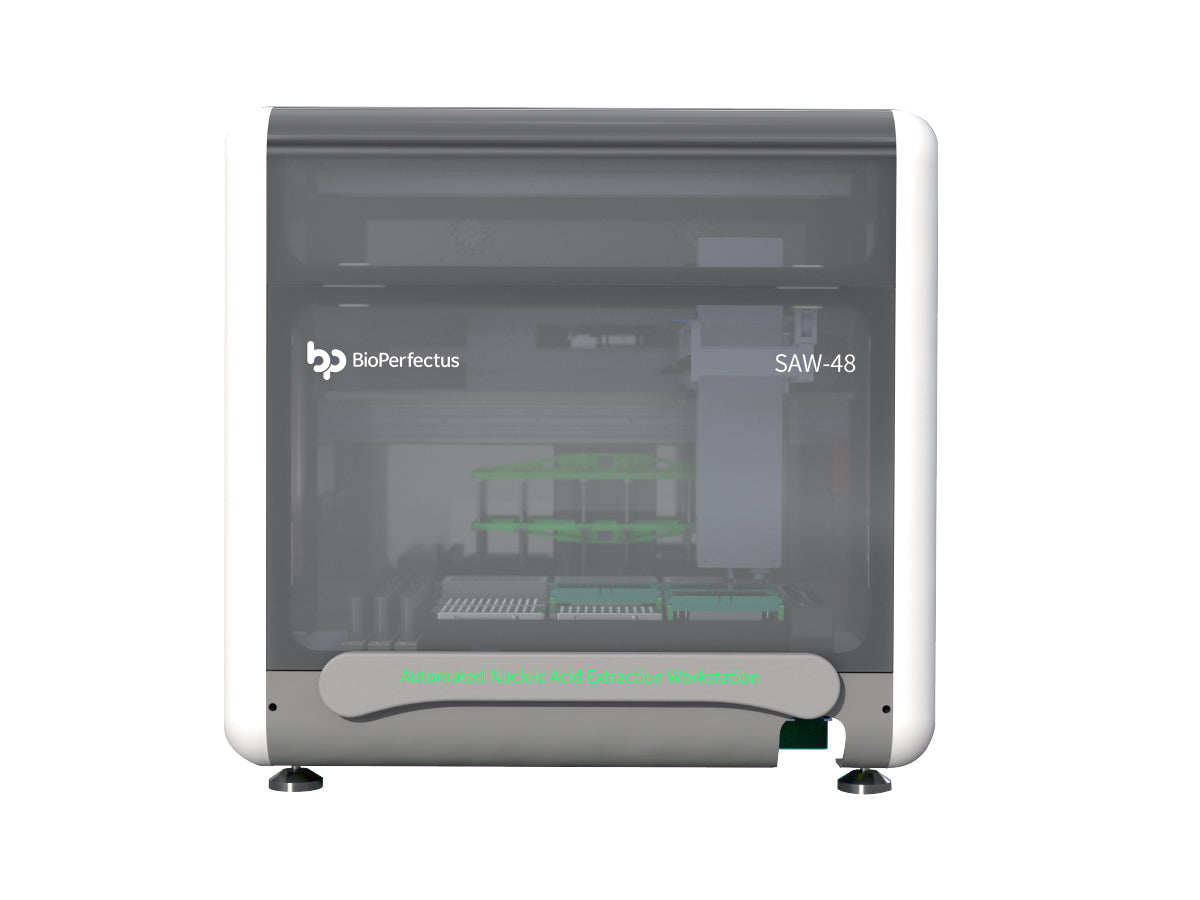
Part 2 — Why traditional systems fail the lab: a technical look at core flaws
When I speak about the dna extraction workstation, I mean the whole package: magnetic bead purification, liquid handling robotics, and the software that ties them together. Traditional bench methods and early automated rigs often fall short because they treat each stage as isolated. You end up with manual transfer points, inconsistent elution volumes, and a tangle of spreadsheets. Technically, that increases contamination risk and lowers reproducibility. I’m blunt here because I’ve watched promising projects stall due to simple integration oversights.
What specifically breaks?
First, lack of LIMS integration. Without LIMS integration, tracking samples is manual and error-prone. Second, poor liquid handling calibration. Pipette variance accumulates across hundreds of wells. Third, inflexible protocols. If you can’t adjust magnetic bead dwell times or tip wash cycles, your yield suffers across sample types. Look, it’s simpler than you think — fix those three and you fix most failures. I also note power stability issues; power converters and backup systems are often afterthoughts, yet they matter for long runs. Finally, as labs scale, edge computing nodes and local compute reliability become relevant — you don’t want a frozen GUI mid-run. These are avoidable flaws, but they require honest system-level design and clear SOPs.
Part 3 — Future outlook: where dna extraction workstations go next
Looking ahead, I expect the next wave of dna extraction workstation platforms to lean into modularity and smarter software. That means adaptive protocols that change bead binding times based on sample feedback, and better LIMS APIs so we stop copying barcodes by hand. In practice, I’ve started testing units that auto-tune based on sample viscosity and adjust aspiration speeds; the time saved is tangible. Real-world impact: fewer reruns, clearer audit trails, and a lab team that can focus on analysis rather than retries — funny how that works, right?
What’s next for labs?
We should evaluate systems on reproducible metrics: sample throughput per technician hour, contamination rate per 1,000 samples, and ease of LIMS integration. I recommend three focused checks before you buy: verify magnetic bead recovery with your sample types, test the liquid handling robotics across the full volume range, and confirm stable power and network redundancy. These steps give measurable confidence. In closing, I feel optimistic — automation isn’t a magic wand, but when designed around real workflows it frees skilled people to do thoughtful science. For labs looking to make that leap, I often point them toward proven vendors — and yes, I trust BPLabLine for clear documentation and solid integration support.
